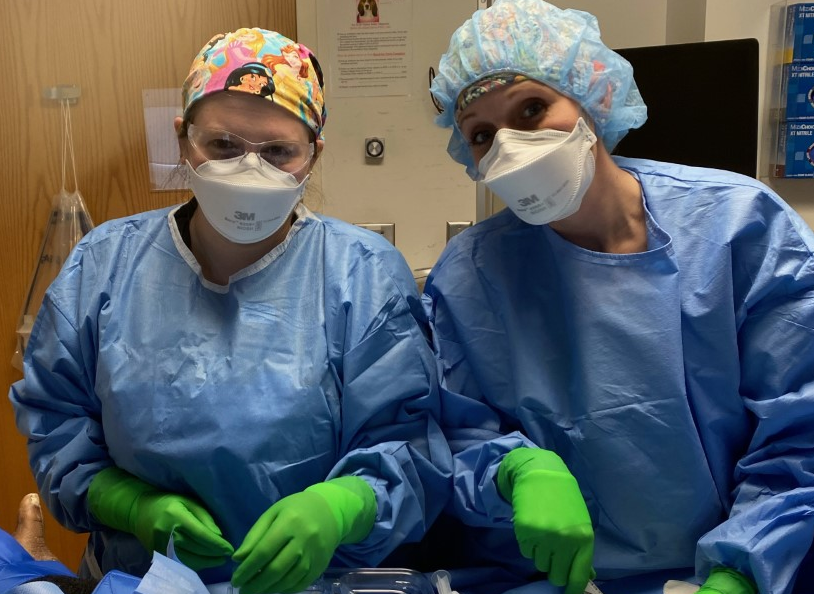
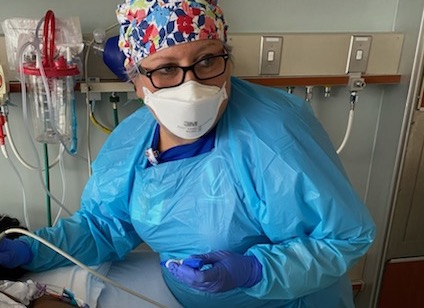
Dementia Patient Disrupting Catheters — Nurse Clinicians in Action-02
Dementia Patient Disrupting Catheters and how a Vascular Access Clinician overcame this obstacle and placed and secured Central Catheter Lines is the focus of this Nurse Clinicians in Action. Dementia Patient Disrupting Catheters – Clinical Case Dementia Patient...
Why Outsource Vascular Access
Healthcare providers Outsource Vascular Access to high quality nurse clinicians because it makes clinical and financial sense in many situations, even when the healthcare provider (such as a hospital) has the option to hire in-house resources. Vascular Access is a...
What does a Vascular Access Nurse do?
In general, a Vascular Access Nurse provides access to a patient’s circulatory system through the insertion of a small, thin tube called a catheter. The degree of complexity of the catheter (aka, the Vascular Access Device (VAD)) in the body can range from IVs, Peripheral IVs (PIVs), and Midlines, contained in the arms, all the way to Central Venous Catheters (CVCs), including Peripherally Inserted Central Catheters (PICCs), Axillary lines, Internal Jugulars (IJs) and Femoral lines (Fems).

Vascular Access Nurse Placed Vas Caths for Dialysis and other Large Bore Lines
With proper training and board of nursing approval, vascular access nurses can perform the insertion of Vas Cath for Dialysis and other large bore lines. Vascular Wellness, a leader in the field of vascular access, is one of a select few companies that has received...
Why does Nuclear Medicine greatly depend on proper Vascular Access?
Proper vascular access is critical to nuclear medicine because the correct injection of a radiopharmaceutical enables safe, effective, and comprehensive imaging leading to proper patient care and management. Incorrect injection that results in fluid leakage into the...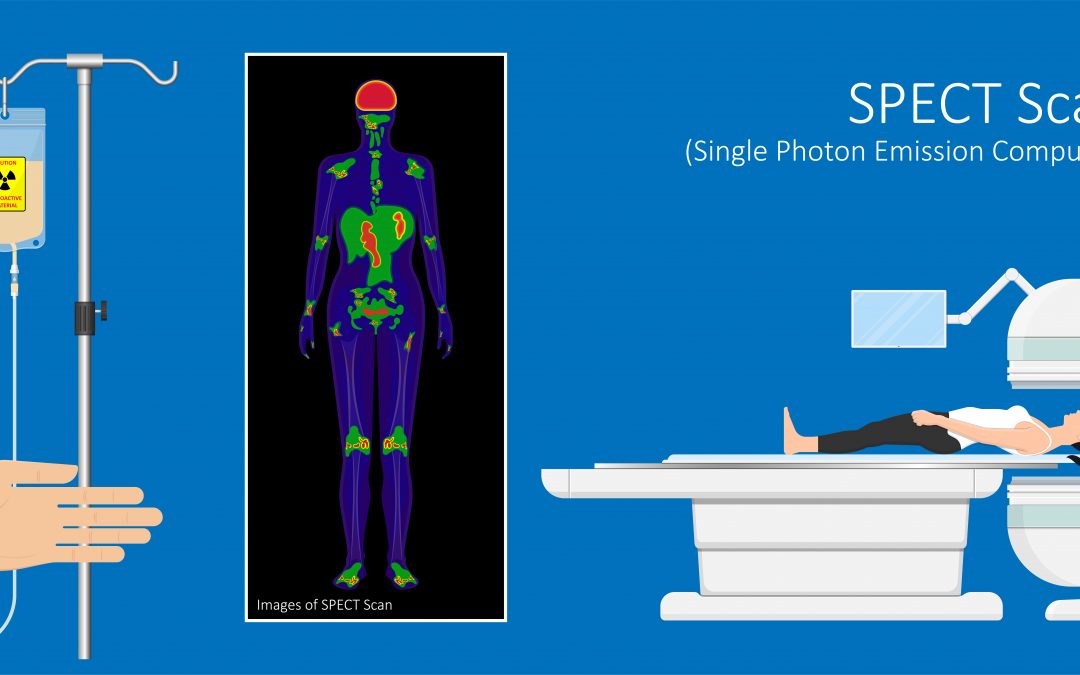
Radiopharmaceutical Extravasations: Hazards…Prevention – Webinar Review
On May 26, 2021, Vascular Wellness leaders Nancy Warden and Stephen Harris presented at the webinar “Radiopharmaceutical Extravasations: Hazards, Mitigation, and Prevention” on the importance of vascular access in nuclear medicine. The seminar provided...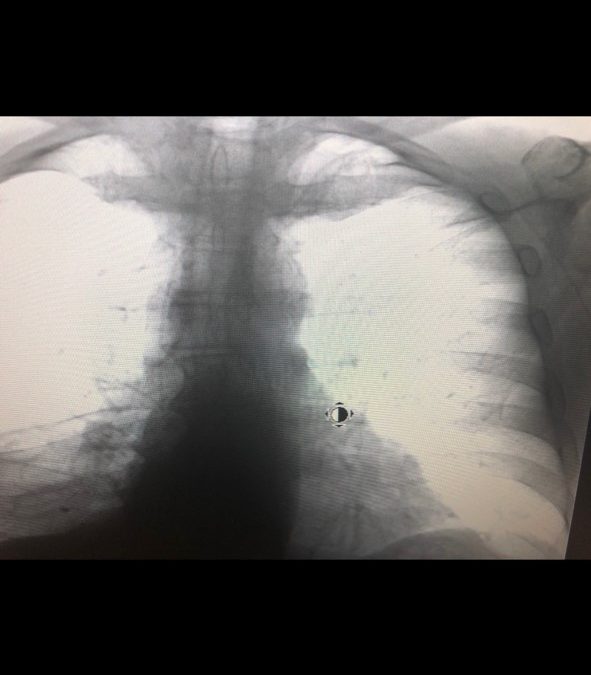
Pinch-Off Syndrome – Nurse Clinicians in Action-01
Pinch-Off Syndrome (ie, the compression and misalignment of a Peripherally Inserted Central Catheter (PICC), into a “v” position) and how the Vascular Access clinician diagnosed and treated the problem is the focus of this Nurse Clinicians in Action....