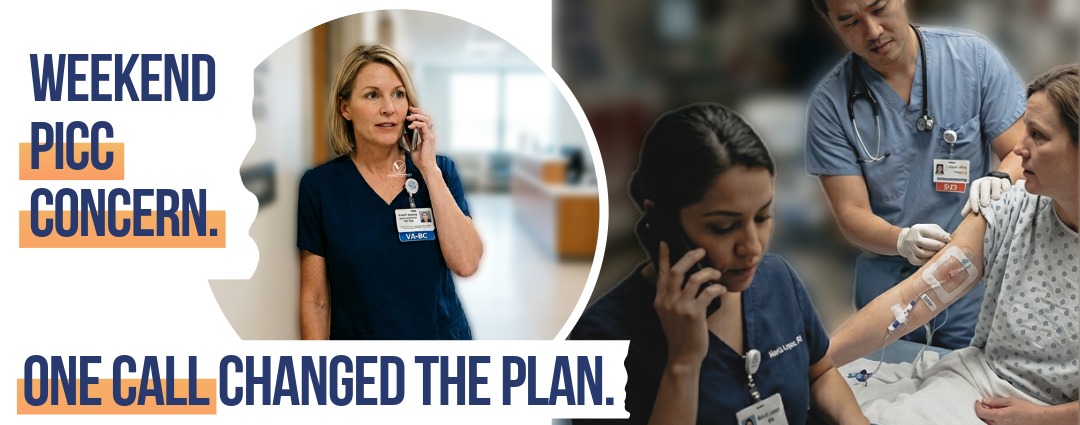
24-Hour Vascular Access Consult and Coordination describes a patient who came to an Emergency Department on a weekend with a suspected infection in her PICC line, which she had in place for long-term outpatient antibiotic therapy, and the ED wasn’t sure of the best...
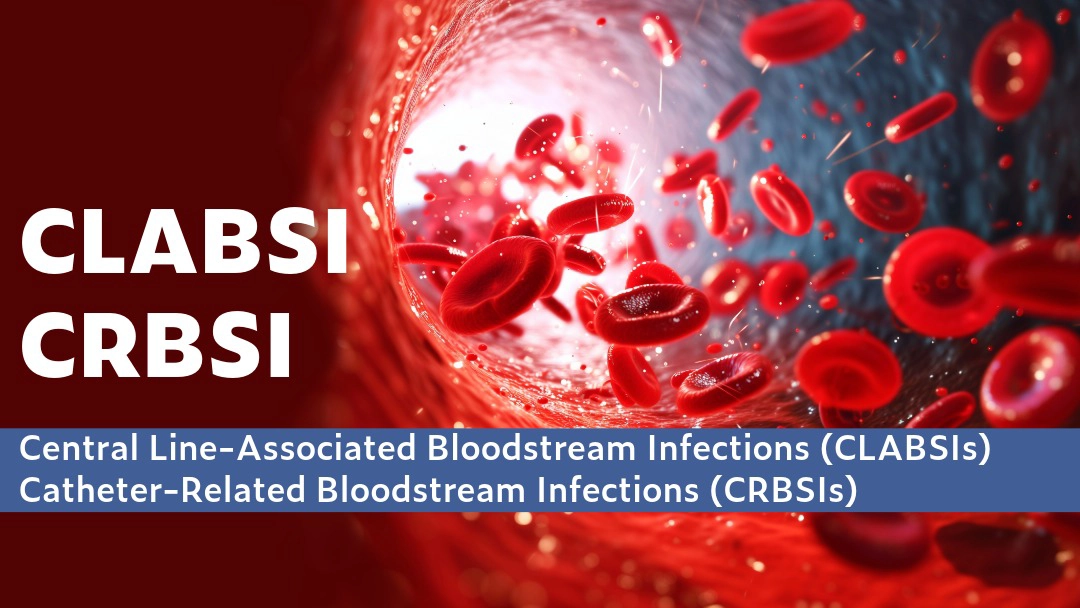
Central Line-Associated Bloodstream Infections (CLABSIs) and Catheter-Related Bloodstream Infections (CRBSIs) The terms Central Line-Associated Bloodstream Infection (CLABSI) and Catheter-Related Bloodstream Infection (CRBSI) are often used interchangeably, and while...
Intravenous (IV) lines are vascular access devices used to gain venous access to a patient, giving the health care team the ability to administer medications and fluids. There are many types of IV lines, with Peripheral IVs (PIVs) being the most common. Because there...
Vascular Access for Surgical Rehabilitation Patient describes how an expert Vascular Access clinician identified co-morbidities in a clinically complex post-surgical patient and worked with the medical team to obtain safe, appropriate vascular access needed to address...
Continuing with our Nurse Clinicians in Action stories, this week offers Failed PIV & SVC Syndrome Patient Cases. One story tells how emergency personnel, without the use and accuracy of the US, were continually sticking the patient hoping to find the vein. The...
Reasons for long hospital stays include continued medical care such as therapy, surgical interventions, and chemotherapy or radiotherapy and also non-medical reasons such as staff inefficiency and miscommunication, equipment mismanagement, waiting for a community...
Vascular Access Services Training Vascular Access Services Training at Vascular Wellness includes classroom, hands-on, and skills testing, and we believe the best training available. Our orientation and on-boarding program, on-going training and skill set development,...
Healthcare workers and staff at healthcare facilities are at higher risk of infection as compared with the general population. This is because they are constantly exposed to contact with infectious sources. However, measures to control infection must be designed to...