Responsive and Adaptable Hospital Support describes how Vascular Wellness provides flexible and agile support for hospitals to handle virtually all clinical events, through exceptional scope and scale of vascular access expertise and interdepartmental collaboration and coordination.
Responsive and Adaptable Hospital Support
– Clinical Case
A facility called Vascular Wellness for a PICC to be placed in a patient in the ICU, and the vascular access nurse arrived in the unit a short while later. While she was reviewing this patient’s records, another ICU nurse responded to a rapid response call on the facility’s Med-Surg floor. Soon after, that ICU nurse came back and asked the vascular access nurse to pivot and prioritize the patient he just saw, as he would need a PICC line more urgently than the original case.
Our nurses regularly collaborate and work with clients as part of their extended care team and facilities to know they can rely on our nurses to spend as much time as needed with each client and each patient, and she quickly pivoted to the newer case.
Responsive and Adaptable Hospital Support
– Diagnosis and Treatment
The vascular access nurse reviewed this patient’s chart to familiarize herself with the case. While she was reviewing it, the patient’s condition worsened, and the care team decided to move him from Med-Surg to the ICU so they could administer vasopressors (to increase blood pressure) and amiodarone (to treat life-threatening arrhythmia), as his heart rate was in the 190s with a systolic blood pressure in the 60s.
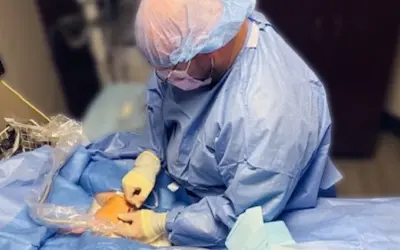
The care team started a saline bolus after the patient was transferred to the ICU, but the IV, which was the patient’s only vascular access, infiltrated. With the need for vascular access becoming critical, the vascular access nurse obtained consent from the patient’s family at the bedside so she could begin the procedure to place a PICC line.
Vascular Wellness regularly uses ECG tip confirmation technology to confirm the proper placement of a PICC line. This enables the vascular access device to be confirmed more quickly for use, and is much faster and less expensive than coordinating, waiting, and obtaining an X-ray for confirmation. However, in cases such as this one, ECG tip confirmation is less reliable due to the patient’s condition.
The Vascular Wellness nurse knew that with the patient’s heart rate so rapid, it was unlikely that she would be able to pick up a P wave, which is needed for proper tip location confirmation when using ECG technology. As such, the vascular access nurse prearranged for a chest X-ray before beginning the procedure to help speed the confirmation so that the PICC line could be used without delay.
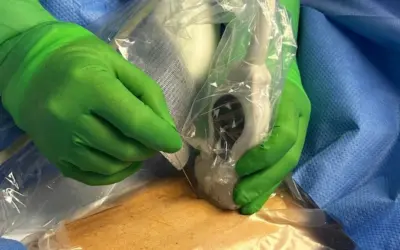
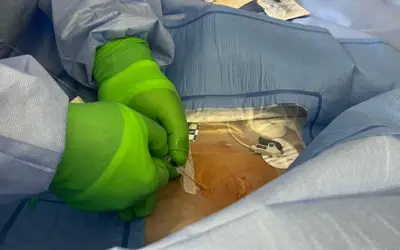
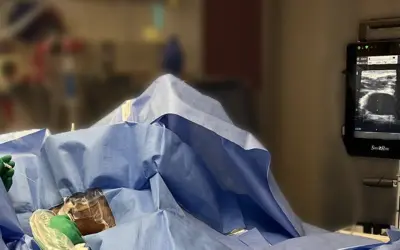
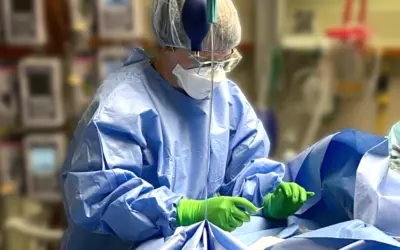
The PICC was placed successfully on the first attempt using ultrasound guidance, and because it was prearranged, the post-procedure chest X-ray verified optimal tip placement very quickly after. Shortly after the PICC was placed and tip location confirmed, the Pharmacy delivered the amiodarone and therapy began without delay.
Responsive and Adaptable Hospital Support
– Key Points
Vascular Access Specialists
As Vascular Access Specialists, Vascular Wellness is an invaluable component of a healthcare facility’s ability to provide the most innovative and up-to-date procedures and best practices for extraordinary patient care and patient experience, no matter what arises. Our clients and their medical care teams know that we provide more than just a skilled vascular access nurse specialist who travels to the patient’s bedside to place requested lines when needed; we provide a comprehensive vascular access solution.
Partnering with Vascular Wellness means not only can clients rely on us for whatever they need to alleviate the stress of gaining vascular access, but also includes:
Extensive Coverage Means No Rushed Procedures
Thanks to our large geographic footprint and redundant coverage, our clients can rely on our nurses to regularly collaborate and work with them as part of their extended care team. They appreciate that our nurses are not pressured to race to the next procedure, and instead, can spend all the time needed with each client and each patient.
Deep Expertise and Agility
Our clinicians are specialists who are trained and precepted in placing Ultrasound Guided PIVs, Midlines, PICCs, and Small and Large Bore lines, and in identifying contraindications and comorbidities to help recommend the most clinically appropriate line in every patient case. Having a clinician who is able to pivot when a prescribed line can be downgraded or advanced, or if additional emergent cases are added, means that your patients can receive prompt care in place, reducing complications, avoiding transportation costs, and allowing your medical team to focus on their field of practice.
Collaborative Approach
Vascular Wellness promotes teamwork, internally and externally, and can become an extension of a client’s in-house team or operate as a client’s dependable outsourced provider. Our deep expertise and collaborative approach have earned us the role as a trusted part of the care team, and with respect to vascular access, we function as a bridge among all stakeholders, including the patient, their family members, and the providers and staff.
Patient-Centric Vascular Access: Our patient- and client-centered team of Vascular Access Board Certified (VA-BC) and skill-verified specialists works with clients to ensure the best, safest, and most anatomically appropriate and comfortable access for their patients right at their bedside when they need it.
24/7/365 Access at No Charge: No matter the time of day, our clients have access – at no charge – to our VST (Vascular Support Team Client Call Center) and on-call advanced vascular access clinicians to ask questions, collaborate, troubleshoot, schedule procedures in advance, and request services.
If you require Vascular Access or want to learn more, speak to the team at Vascular Wellness today.
For the latest articles and insights, follow us on LinkedIn, Facebook, Twitter, YouTube, and Instagram.
Vascular Wellness provides:
(1) Comprehensive vascular access services to Mississippi, North Carolina, Ohio, Oklahoma, Pennsylvania, South Carolina, and Virginia; and
(2) Customized vascular access services to Arkansas, Delaware, Georgia, Tennessee, and West Virginia; and
(3) Support vascular access services to Kentucky.
Read more NCIA Patient Cases
Need an Expert who can Place Central Lines?
We bring skilled, high-quality, timely care to patients in Hospitals, LTACHs, SNFs, Hospital at Home programs, and Outpatient facilities.